
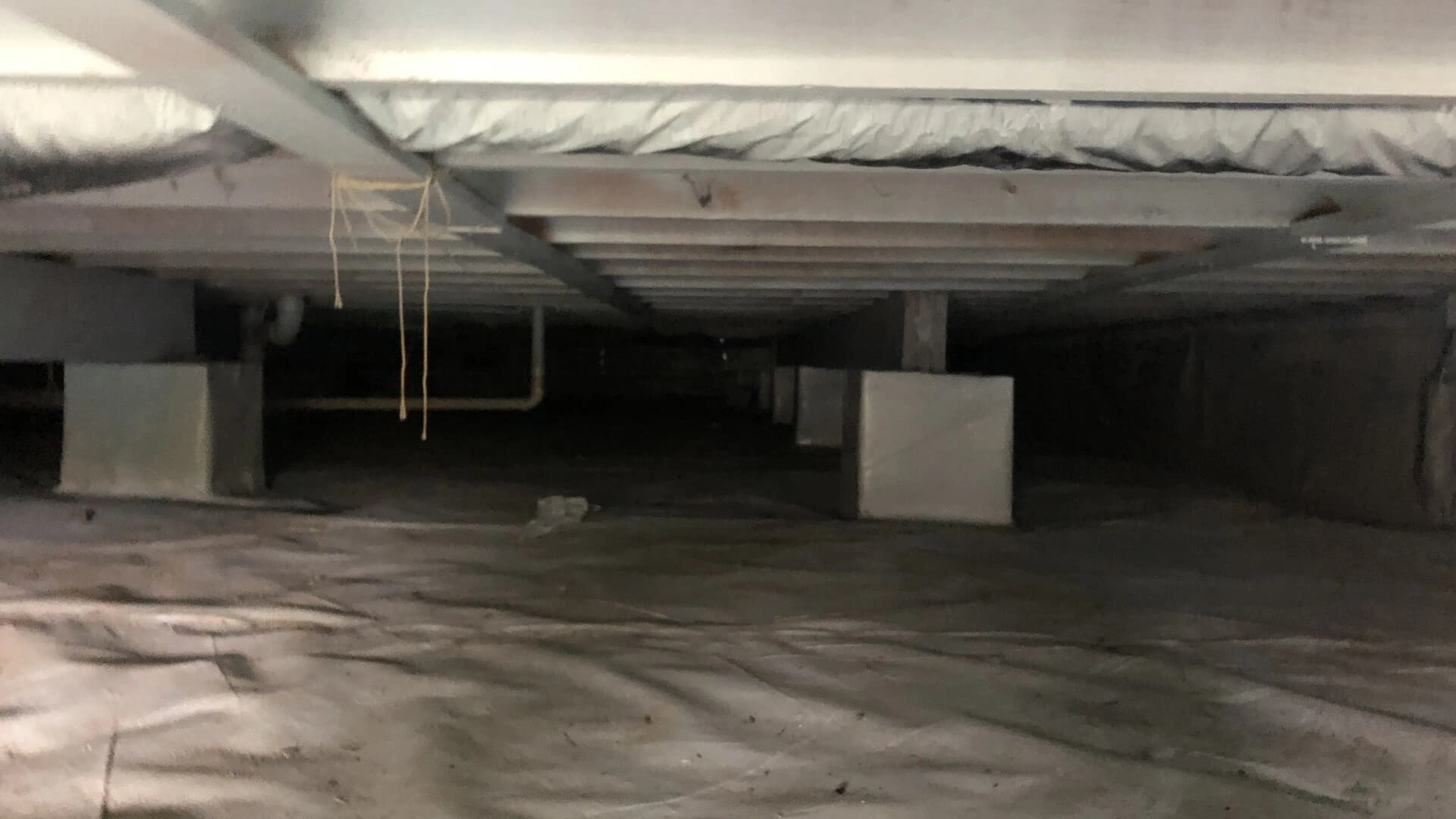
Sign #1: Standing Water and Persistent Moisture
Standing water or damp spots in your crawlspace represent one of the most urgent indicators that professional intervention is required immediately. Throughout Evansville and surrounding Southern Indiana communities, the clay-heavy soil composition combined with seasonal Ohio River valley humidity creates particularly challenging conditions for below-grade spaces. Between late winter and early spring, when freeze-thaw cycles disrupt ground stability and spring rains saturate the soil, homeowners frequently discover pooling water that persists long after precipitation ends.
This moisture does not simply evaporate or resolve itself. Water accumulation indicates compromised drainage systems, inadequate grading around your foundation perimeter, or failures in your existing waterproofing infrastructure. The longer moisture remains present, the more severe the cascading damage becomes. Wood structural members begin to rot, metal fasteners corrode, and the humid environment becomes ideal for mold colonization that threatens indoor air quality throughout your entire home.
Professional waterproofing contractors utilize specialized moisture detection equipment to identify the precise source of intrusion, whether from groundwater seepage, surface runoff, or plumbing failures. Effective basement waterproofing solutions address both immediate water removal and long-term prevention through properly engineered drainage systems, sump pump installation where appropriate, and moisture barriers designed specifically for regional soil conditions. Attempting to manage persistent moisture without professional assessment typically results in recurring problems and exponentially higher repair costs as structural deterioration progresses undetected.
Sign #2: Deteriorating Floor Joists or Support Beams
When floor joists, support beams, or subfloor decking in your crawlspace show signs of softness, discoloration, or visible decay, you are witnessing advanced structural compromise that demands immediate professional evaluation. The humid conditions common to Evansville crawlspaces, particularly during summer months when temperatures remain elevated and ventilation proves insufficient, create ideal environments for wood-destroying fungi and accelerated decomposition of structural lumber.
Homeowners often first notice symptoms upstairs rather than in the crawlspace itself. Floors that feel unusually springy or bouncy when you walk across them, doors that suddenly fail to close properly, or visible sagging in floor surfaces all point to deteriorating support structures below. By the time these symptoms manifest in living spaces, the damage typically extends beyond simple repairs and requires systematic structural restoration to ensure safety and stability.
Foundation repair professionals assess the extent of deterioration and determine whether reinforcement, partial replacement, or complete structural member replacement is necessary. Modern underpinning contractors employ engineered solutions including steel supplemental beams, adjustable support posts, and moisture-resistant materials that address not only current damage but prevent recurrence. The response time matters significantly here, as continuing to occupy a home with compromised floor systems presents genuine safety risks while allowing further deterioration that increases both project scope and associated costs when restoration finally occurs.
Sign #3: Mold Growth and Musty Odors
Visible mold growth on crawlspace surfaces, musty odors that permeate your home, or unexplained respiratory symptoms among household members all signal serious air quality degradation originating beneath your floors. Research consistently demonstrates that approximately forty to fifty percent of the air in your home’s living spaces originates from the crawlspace through a phenomenon called the stack effect, meaning contamination below directly impacts the air your family breathes daily.
During Evansville’s humid summer months and throughout the extended spring season when relative humidity frequently exceeds seventy percent, inadequately controlled crawlspace moisture creates optimal conditions for rapid mold proliferation. The fibrous insulation commonly found in older homes acts as particularly effective growth medium, while wooden structural components, cardboard storage materials, and organic debris provide additional food sources for fungal colonies that expand quickly once established.
Professional water and moisture control services address mold problems systematically rather than superficially. Surface cleaning alone proves ineffective because it fails to eliminate the moisture conditions that caused initial growth. Qualified waterproofing contractors implement integrated solutions that combine source water elimination, controlled ventilation or encapsulation strategies, dehumidification systems calibrated for regional humidity levels, and antimicrobial treatments for affected surfaces. These coordinated interventions restore healthy air quality while preventing recurrence, protecting both your property investment and your family’s health over the long term rather than providing temporary cosmetic improvement that masks ongoing contamination.
Sign #4: Foundation Cracks and Settlement
Cracks appearing in your foundation walls, gaps developing between walls and floors, or diagonal fractures extending across masonry surfaces indicate active foundation movement that requires prompt professional assessment. Throughout the Evansville region, the expansive clay soils undergo significant volume changes as moisture content fluctuates seasonally. During dry periods, soil contracts and pulls away from foundation walls, while saturated conditions cause expansion that exerts lateral pressure against structural elements, creating a cyclical stress pattern that accelerates deterioration.
Foundation settlement does not occur uniformly. Differential movement, where one section of your foundation settles more than adjacent areas, produces the most concerning structural symptoms. You may observe cracks that widen over time, windows and doors that bind in their frames, or visible tilting in walls and chimneys. These warning signs indicate that soil beneath your foundation no longer provides adequate support, often because moisture intrusion has compromised soil bearing capacity or because poor drainage concentrates water in specific locations beneath your structure.
Modern foundation repair techniques employed by qualified drainage contractors and underpinning contractors stabilize settling foundations through engineered solutions like helical piers that transfer structural loads to competent soil strata below unstable surface layers. These systems stop progressive settlement while often allowing controlled lifting to restore structures toward original positions. Concurrent installation of proper perimeter drainage and moisture management systems addresses the underlying causes rather than merely treating symptoms, providing durable solutions that protect your foundation investment and prevent recurring movement that threatens structural integrity and property value over time.
Sign #5: Pest Infestation and Termite Activity
Discovering rodent droppings, insect activity, or evidence of termite tubes in your crawlspace signals that your home’s envelope has been compromised, allowing unwanted intrusions that threaten both property and health. Damp, poorly maintained crawlspaces attract pests for the same reasons they foster mold growth: the moisture-rich environment provides ideal conditions for insects while offering rodents water sources, nesting materials, and shelter from temperature extremes common to Southern Indiana’s variable climate.
Termites represent particular concern in humid crawlspace conditions because moisture-damaged wood becomes increasingly vulnerable to infestation while the concealed location allows colonies to establish and expand undetected for extended periods. Subterranean termites, prevalent throughout the Evansville area, construct distinctive mud tubes from soil to wooden structural members, creating protected highways that enable workers to access food sources while maintaining the humid microclimate these insects require. By the time visible damage appears in living spaces, structural compromise often proves extensive and costly to remediate.
Professional crawlspace restoration creates environments hostile to pest colonization through systematic moisture elimination, proper ventilation or encapsulation, and sealing entry points that currently allow intrusion. When waterproofing contractors install comprehensive moisture barriers and address drainage deficiencies, they eliminate the damp conditions that initially attracted pests while removing the excess humidity that supports ongoing insect activity. This integrated approach protects your investment more effectively than pest control alone, because treating infestations without correcting underlying moisture problems produces only temporary relief before new colonies establish themselves in the unchanged environment that welcomed the original invaders.