
Pressure Point: Recognizing the Origin of Bowing and Cracking
When a foundation wall bows inward, it’s usually caused by hydrostatic pressure, the force of water-saturated soil pushing against your basement walls. In Evansville, IN, and surrounding areas like Newburgh and Henderson, clay-heavy soil expands after rain, creating consistent stress on concrete block walls.
Over time, this pressure leads to visible cracking or a horizontal bulge through the center of the wall. Ignoring these signs can lead to worsening structural problems, water leaks, or even partial collapse. That’s why bowing basement wall repair cost is something to consider early, before the issue gets worse and more expensive to fix.
Both carbon fiber straps and wall anchors are long-term stabilization methods. But the one that’s right for your property depends on how much your wall has already moved and how much correction it needs.
Carbon Fiber: Defining the Modern, Low-Profile Wall Repair
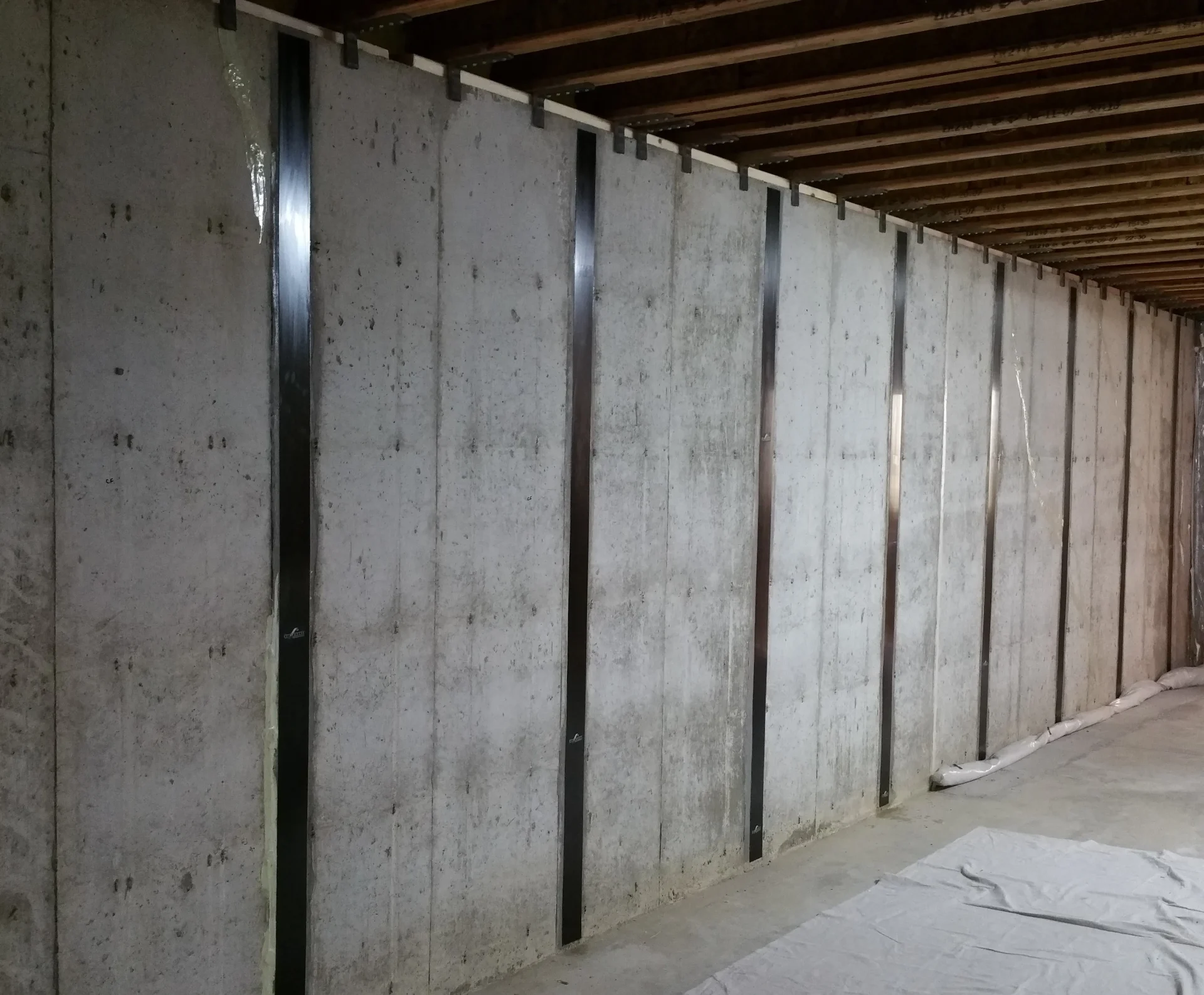
Carbon fiber straps are a modern solution for stabilizing slightly bowing walls. These straps are made from woven carbon fibers, which are stronger than steel by weight. When bonded to the wall with structural epoxy, they stop further inward movement.
This method works better when the bowing is less than two inches. Once installed, carbon fiber wall repair is nearly invisible and doesn’t take up any space inside your basement. There’s no digging required outside, making it clean, fast, and affordable compared to excavation-based methods.
For many property owners, this approach fits well with finished basements or homes where minimal disruption is important. It’s a reliable and permanent fix for early-stage wall movement, and one of the most requested Midwest wall repair solutions we offer.
Traditional Power: Defining the Wall Anchor Stabilization System
Wall anchors are a more traditional but equally effective method, especially for walls that have moved more significantly. This system involves drilling small holes through the foundation wall and driving a steel rod out into the soil. That rod connects to a steel plate buried several feet away, then secured with an interior plate inside your basement.
By tightening the anchor over time, our crew can slowly pull the wall back toward its original position, correcting the bow. Wall anchors are better for walls with more than two inches of movement or where the property owner wants some straightening potential, not just stabilization.
Because this method involves outside excavation, we assess each property carefully to ensure there’s enough yard space for proper installation. Homes with limited exterior access or utility lines nearby might be better suited for carbon fiber reinforcement.
Method Matchup: Choosing the Right Stabilization System
Choosing between carbon fiber straps and wall anchors depends on the extent of the damage, accessibility, and your long-term goals.
Here’s a simple comparison:
| Factor | Carbon Fiber Straps | Wall Anchors |
| Wall Movement | Ideal for 2 inches or less | Works for more than 2 inches |
| Space Needed | No yard access needed | Requires exterior excavation |
| Appearance | Low-profile, paintable | Visible steel plate inside |
| Correction Ability | Stabilizes but doesn’t straighten | Can gradually straighten the wall |
| Installation Time | 1–2 days | 2–3 days |
| Average Wall Stabilization Cost | Lower | Moderate to higher |
Both systems deliver long-term wall stabilization, but your choice comes down to what your basement needs most: stopping further movement or actually pulling the wall back.
Beyond the Estimate: What Influences Your Final Repair Bill
The bowing basement wall repair cost in Evansville, IN, varies based on wall size, condition, and access.
On detail:
- Carbon fiber wall repair, depending on wall height and materials.
- Wall anchor systems depend on soil conditions and excavation requirements.
Property owners should view these repairs as long-term investments. Stabilizing your wall now prevents future water damage, foundation settlement, and costly reconstruction. At Midwest Structural Solutions, LLC, we provide clear pricing with no surprises, and every quote includes a visual inspection, soil assessment, and structural evaluation before we recommend any repair.
Making the Right Choice: When to Choose Straps vs. Anchors
If you live in an Evansville, IN, neighborhood where basements are common, like McCutchanville or Melody Hill, the age of your home and local soil conditions play a major role.
Here’s a quick guide:
- Choose Carbon Fiber Straps if your wall is cracked but hasn’t shifted much, and you want a clean, low-maintenance fix that won’t interfere with finishing your basement.
- Choose Basement Wall Anchors if the wall is visibly bowing inward, or if you want to restore alignment over time.
Every foundation tells a story. We’ve seen basements where a small horizontal crack indicated early pressure that could be fixed in one day, while others required anchors to restore full stability. The right choice comes from evaluating your home’s specific conditions rather than choosing based on cost alone.
Know the Soil: Why Experience is Key in Bowing Wall Repair
Evansville, IN’s unique mix of clay soil, seasonal rain, and older homes means foundation issues show up differently here than in other parts of Indiana. That’s why it helps to work with a local contractor who understands how these factors affect wall performance over time.
At Midwest Structural Solutions, LLC, we’ve helped countless property owners stabilize and protect their basements using both systems. We don’t push one method over the other; instead, we explain your options, go over the wall stabilization cost, show examples of past local projects, and guide you toward the safest, most durable solution.
Our goal is simple: to keep your property stable, dry, and secure for years to come without unnecessary disruption or cost.
Conclusion
Whether you’re comparing carbon fiber vs wall anchor systems or just starting to explore Midwest wall repair solutions, the right approach depends on your property’s current condition. Carbon fiber is ideal for early-stage bowing, while wall anchors handle more advanced movement and correction. Both protect your home’s value and safety when installed by qualified professionals.
If you’ve noticed cracks or bowing in your basement walls, don’t wait until the problem grows. Call Midwest Structural Solutions, LLC at (812) 305-0781 to schedule a professional assessment and repairs. Our team will inspect your foundation, explain your options in plain language, and help you avoid costly mistakes with a repair plan you can trust.